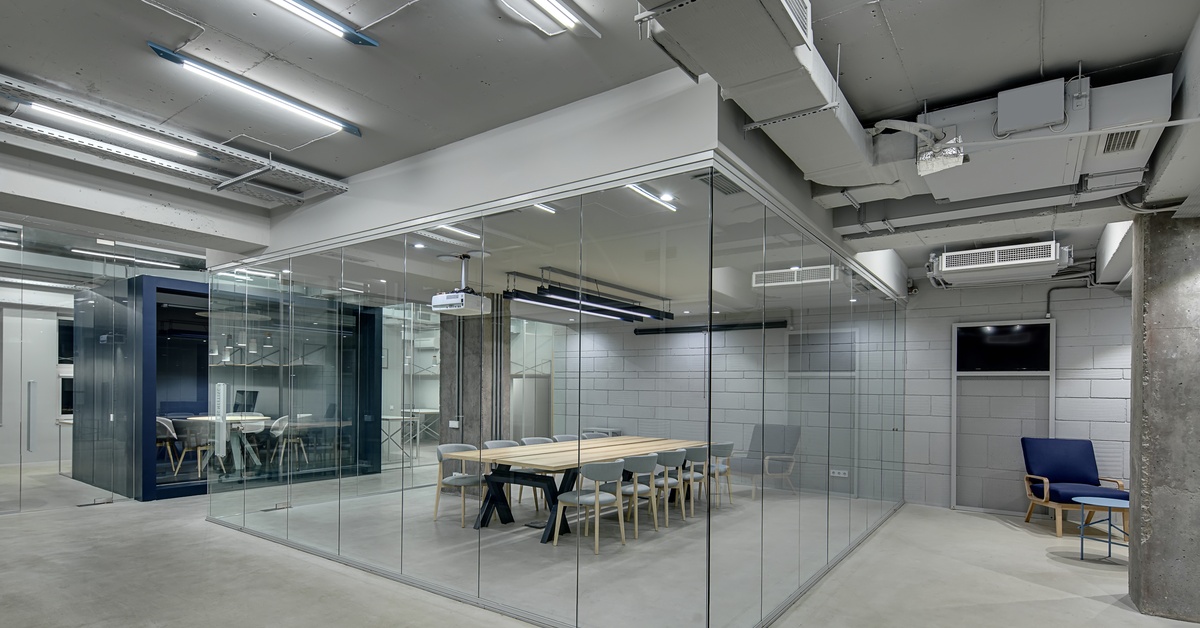
Businesses evolve. Priorities shift. The way teams collaborate transforms constantly. In the past, a desk and a chair defined the workspace. Now, connectivity and digital infrastructure define the employee experience. Organizations that ignore this shift risk falling behind. Those who embrace it gain a competitive edge.
When you analyze successful modern workspaces, a pattern emerges. The furniture and the technology do not exist as separate entities. They function as a cohesive unit. Monitors mount seamlessly to arms. Cables disappear into hidden channels. Conference tables contain built-in power modules. This fusion represents why integrated technology is the future of office design and how it seamlessly improves the modern workspace. Eliminating everyday hassles such as tangled cables or hard-to-find outlets allows employees to focus on what truly matters: their work.
The Evolution of the Smart Workspace
Workplaces formerly relied on analog tools. Whiteboards, paper notepads, and physical file cabinets dominated the landscape. While these items remain useful, digital collaboration tools now take precedence. An innovative workspace incorporates these digital tools directly into the physical environment.
Reducing Friction for Employees
Friction kills productivity. Every minute an employee spends trying to connect a laptop to a presentation screen represents lost value. Every time a team member crawls under a desk to find an outlet, focus breaks. Integrated technology solves these mechanical problems.
- Instant Connectivity: Ports and hookups sit at the desktop level.
- Wireless Charging: Surfaces charge devices without cords.
- Unified Control Panels: One touch starts a meeting.
By embedding tech into the furniture and architecture, facilities managers create an environment where work happens naturally.
Audio Visual Integration in Meeting Spaces
Technical frustrations often derail conference rooms. Sound fails, video lags, and that crucial HDMI cable always seems to vanish. These disruptions break the flow of ideas. You can eliminate these hurdles by choosing a room design focused on deliberate AV integration.
We recommend modern conference tables with built-in microphones and speakers. This setup captures audio from every participant, ensuring remote listeners hear everyone clearly, not just the person closest to the phone. To create a natural line of sight, we mount cameras at eye level. We also include soundproofing panels to improve audio quality and eliminate distracting echoes.

Cable Management and Infrastructure
Nothing ruins the aesthetic of a sleek office faster than a nest of tangled wires. Loose cables also present safety hazards. Integrated design prioritizes the concealment and organization of these necessary connections.
Desks come equipped with grommets and trays. These channels route power and data cords down the leg of the desk and into floor boxes. Vertebrae cable managers guide wires from sit-stand desks to the floor, expanding and contracting as the desk moves.
The Importance of Power Access
Access to power determines where people sit. If a lounge area lacks outlets, employees will avoid it when their batteries run low. Integrating power into soft seating, collaborative tables, and even outdoor furniture expands the office’s usable footprint.
- Desktop Modules: Clamp-on units provide USB-C and standard AC power.
- In-Surface Units: Flush-mounted power strips maintain a clean profile.
- Daisy-Chain Systems: Modular electrical systems power multiple desk clusters from a single feed.
This approach gives employees autonomy. They choose where to work based on the task, not the location of the nearest wall socket.
Room Scheduling and Occupancy Sensors
Space utilization data drives better real estate decisions. Companies often rent more space than they use. Alternatively, they might lack sufficient meeting rooms for peak hours. Technology provides the answers.
Room booking displays are mounted outside conference rooms. These panels show the current status: green for available and red for busy. Employees can book ad-hoc meetings directly on the panel. Integrating with calendar apps syncs this information across the organization.
Leveraging Data for Design
Occupancy sensors take this a step further. These discreet devices track which desks and rooms are most active. They reveal patterns. Perhaps the large boardroom sits empty while the huddle rooms remain constantly full. Facilities teams use this data to adjust the layout.
If the data shows high demand for quiet zones, the company can install acoustic pods. If collaboration areas see heavy traffic, they can add more open tables. This feedback loop ensures the office design remains aligned with actual usage patterns.

Supporting the Hybrid Workforce
Hybrid work demands parity. Remote workers deserve the same presence as in-office workers. In-office workers deserve the same flexibility they enjoy at home. Integrated technology bridges the gap.
Digital whiteboards allow distributed teams to brainstorm on the same canvas in real time. Smart cameras zoom in on the active speaker, allowing remote participants to read facial expressions. These tools humanize the digital interaction.
The Role of Acoustics
Video calls generate noise. An open office plan filled with people on calls creates a cacophony. Acoustic integration mitigates this issue. Sound-masking systems emit a low-level background noise that renders speech unintelligible at a distance. This reduces distractions.
Furniture also contributes to managing sound. High-walled cubicles and acoustic panels absorb noise, while phone booths offer private spaces for loud calls. Using sound masking technology alongside sound-absorbing furniture helps create a well-balanced acoustic environment.
Future-Proofing the Workplace
Technology changes rapidly. An office design must adapt. Modular furniture systems allow for reconfiguration. Removable panels provide access to wiring for upgrades.
Wireless casting eliminates the need for specific cable types. If a new connector becomes the standard, the infrastructure supports it without tearing down walls. Investing in flexible, adaptable systems saves money over time. It eliminates the need for a complete renovation whenever tech standards shift.
Sustainability Through Adaptability
Adaptable offices reduce waste. Instead of discarding furniture that no longer meets technical requirements, companies reconfigure it. They swap out a power module. They add a monitor arm. This modularity extends the lifespan of the physical assets.
Smart building systems also regulate energy use. Lights turn off when sensors detect an empty room. HVAC systems adjust based on occupancy. These integrations reduce the organization’s carbon footprint.
Planning Your Next Office Upgrade
Creating a tech-integrated workspace requires a roadmap. It starts with understanding the workforce’s needs. Do they need more video call spaces? Do they struggle with finding desks?
Survey the team to gather insights, then collaborate with experts in furniture and technology. Combining these areas results in a functional workspace. Ignoring integration leads to frustration. It results in beautiful rooms that no one uses because the tech fails. It leads to messy desks and tripping hazards. Prioritizing integration leads to efficiency. It creates a space for work to flow.
The investment in integrated design pays dividends. Retention rates rise when employees feel supported. Productivity increases when tools work seamlessly. The office becomes a destination, not a mandate. This demonstrates why integrated technology is the future of office design.
Ready to transform your workspace? Consulting with our team of office furniture dealers is the first step. We’ll guide you through the entire process, from initial layout to final installation, ensuring that every piece of furniture meets your business’s technological requirements.